Container Storage vs Traditional Self-Storage: Which Is Right for You?
When most people picture self-storage, they imagine a corridor of roller-shuttered doors inside a large building. But a significant portion of the UK storage market works very differently. Container storage, which involves steel units on an open or covered site with drive-up access, has become a popular alternative, and for some customers it is the better fit.
The problem is that the choice is not obvious from the outside. Both options are called 'self-storage', both charge monthly, and both let you keep your belongings. But they work differently, serve different needs well, and carry different trade-offs. This guide gives you the full picture so you can make the right call.
What you will learn:
- How container storage and indoor self-storage actually differ in setup and day-to-day use
- What drive-up access really means in practice and why it matters for certain customers
- How sizes compare and where containers have a genuine advantage for volume
- Which option is better for sensitive items like documents, electronics, and clothing
- How the cost difference breaks down and what you are actually paying for in each case
- A practical framework for matching the right option to your specific situation
What is the actual difference between container storage and indoor self-storage?
What is container storage?
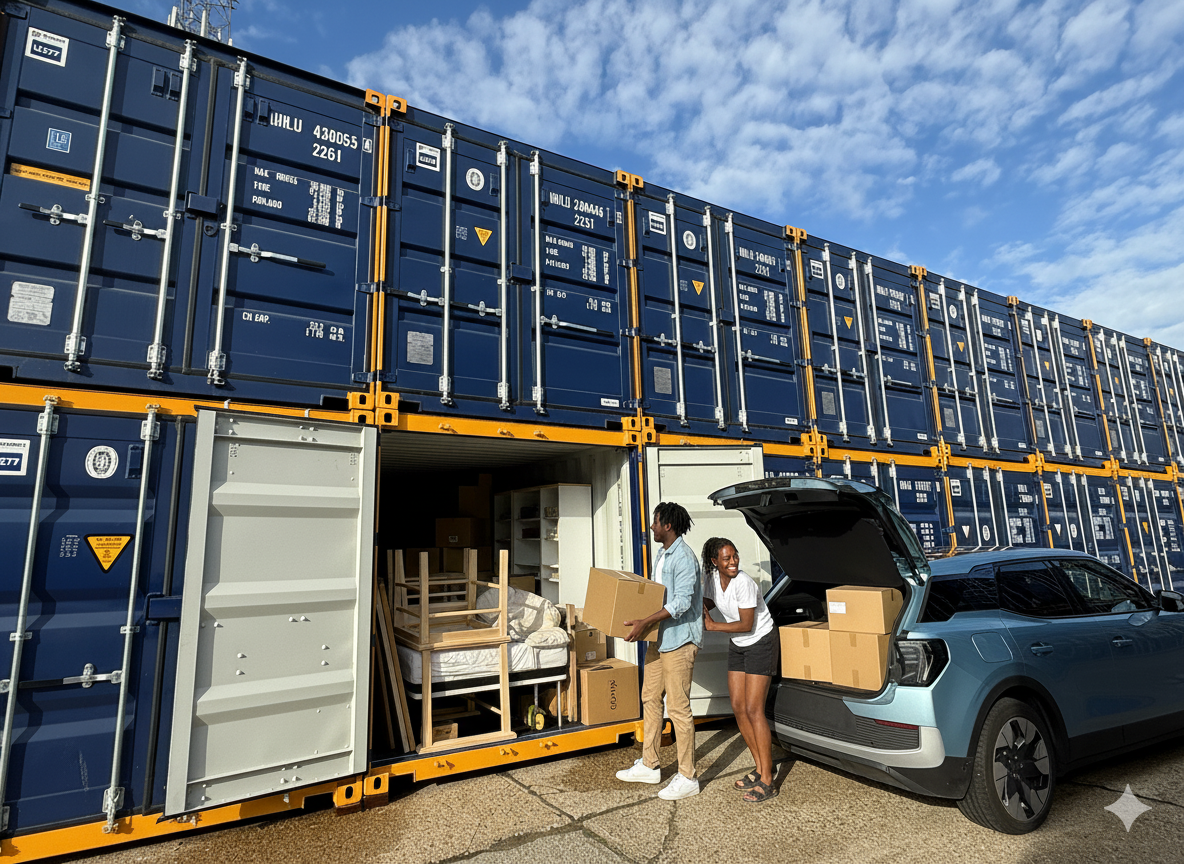
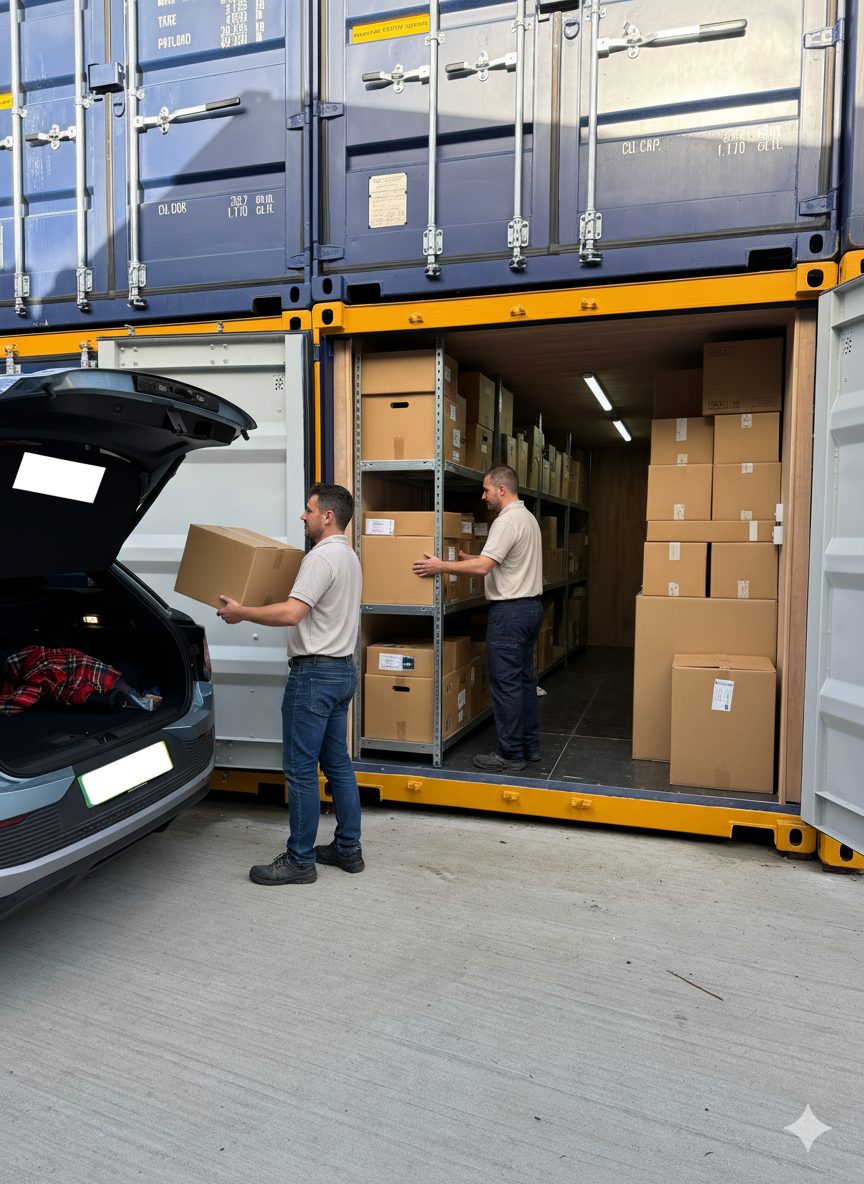
Container storage uses steel units on a secure outdoor site. You drive directly up to your unit and load straight from your vehicle.
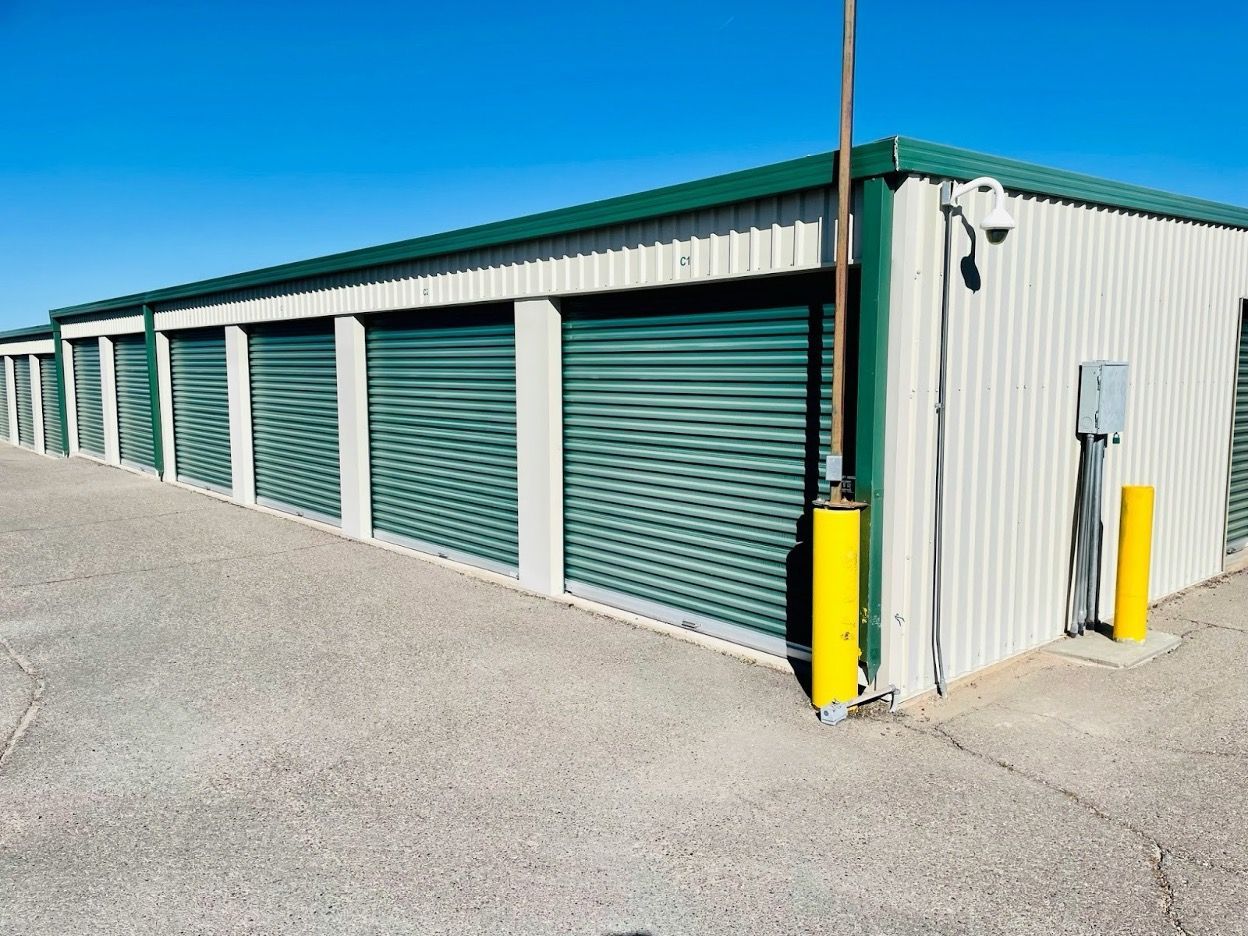
Indoor self-storage is what most people encounter first. A purpose-built building, usually steel-framed or a converted retail unit, houses a series of individual rooms or units accessible from interior corridors. You park outside, walk to your unit, load and unload using trolleys, and leave. The whole facility is climate-controlled or at least weatherproofed, and your unit is inside the building's envelope.
Container storage works from the outside in. Your unit is a steel shipping container, or a purpose-built equivalent, sited on a secure yard. You drive directly up to it, open the doors, and load straight from the back of your vehicle. There is no building to pass through, no corridors, no lifts. The container is your unit and your access point in one.
That difference in physical setup drives most of the other differences between the two options: how loading works, how environmental conditions are controlled, how pricing stacks up, and which types of belongings are better suited to each.
The simplest way to think about it: indoor self-storage is designed around convenience of access and environmental consistency. Container storage is designed around ease of loading and value for money on larger volumes.
"Most people don't realise the choice between container and indoor storage isn't really about quality, it's about what you're storing and how you need to use it. The customers who get the most from container storage are typically the ones who would have been paying for infrastructure they didn't actually need." — David Mantle, CEO and Co-Founder, Stashbee
Does drive-up access actually make a difference?
Is drive-up storage easier to load? Yes. Drive-up access lets you park directly alongside your unit and load without trolleys, lifts, or corridors. For heavy or bulky items, this can cut loading time by more than half.
If you have never loaded a storage unit from the back of a van, this might not seem like a meaningful distinction. If you have spent an afternoon moving furniture through a building, down a corridor, and into a room at the end, you already know the answer.
Drive-up access means you pull your vehicle directly alongside the container door, open up, and transfer items straight across. There is no trolley run, no lift wait, no corridor navigation. For anyone moving heavy or awkward items, furniture, appliances, workshop equipment, garden machinery, trade materials, the time saved is substantial. What might be a two-hour loading job becomes thirty minutes.
When drive-up access changes the calculation
The loading advantage matters most in three situations. First, when you are moving volume. If you are clearing a house, moving between properties, or putting an entire room of furniture into storage, drive-up access removes the friction that makes indoor loading exhausting.
Second, when you need frequent access. A tradesperson who visits their storage unit twice a week to collect tools and materials will notice the difference in a matter of days. Getting in and out quickly, without navigating a building, means storage visits take ten minutes instead of forty-five.
Third, when the items you are storing are heavy or irregular in shape. Sofas, workbenches, bikes, garden equipment, and building materials do not move well through corridors. Drive-up access means your vehicle does the work instead of your back.
The trade-off
Drive-up access does mean your container is more exposed to external conditions during loading. On a wet day, you are loading in the rain. Some container sites have covered bays or canopied access points that mitigate this, but it is worth asking about before you commit. Facilities like Flexible Storage that are purpose-designed for container self-storage typically account for this; a site that has simply placed containers in a field often has not.
How do sizes compare, and where do containers have the advantage?
How much can a 20-foot storage container hold?
A 20-foot storage container capacity is roughly 1,100 to 1,200 cubic feet — enough for the full contents of a three to four-bedroom house, including bulky furniture, with room to spare.
Indoor self-storage units are typically sold in a range from around 10 square feet (about the size of a large wardrobe) up to 200 square feet or more for commercial users. The most common sizes sit between 25 and 100 square feet, which suits domestic customers in the middle of a move, students, or businesses storing moderate volumes of stock.
Container units, by contrast, tend to start larger. A standard 10-foot container gives you around 560 cubic feet of usable volume. A 20-foot container, the most common size, provides roughly 1,100 to 1,200 cubic feet. These numbers sound abstract until you realise that a 20-foot container can hold the full contents of a one to three-bedroom house, including bulky furniture or a standard car.
What this means in practice
For customers who need a small amount of storage,container storage can be the right call. Flexible storage offers units from 6ft, 8ft, and 10ft, which suit customers who do not need a full 20-foot container but still want the convenience of drive-up access at a competitive price.
For customers with volume, the calculation shifts. A large indoor unit that matches the capacity of a 20-foot container will typically cost more per cubic foot, partly because the building infrastructure, staffing, and overheads of an indoor facility have to be priced into every unit. Container storage at this volume level is almost always better value, and the loading process is substantially easier.
If you are storing the contents of a house, a container is not just cheaper, it is operationally easier. Furniture that cannot be dismantled goes in whole, in one trip, without navigating a building. The unit holds more, costs less per cubic foot, and requires fewer journeys.
Which option is better for sensitive items?
Is container storage safe for electronics and documents? It depends on the facility. Well-sealed container units from reputable operators are weathertight, but for electronics or documents stored long-term, verify moisture management before booking.
This is the question that most guides handle poorly, either overstating the risk of containers or understating the limitations of indoor storage. The honest answer is: it depends on what you are storing and what the specific facility offers.
Items that benefit from consistent indoor conditions
Electronics, including computers, televisions, and audio equipment, are sensitive to moisture and significant temperature fluctuation. Condensation forming inside equipment can cause corrosion and failure over time. If your container site does not offer climate control or is not properly sealed against moisture ingress, this is a real risk for prolonged storage.
High-value clothing and textiles, particularly anything made of natural fibres such as wool, silk, or linen, is susceptible to mould and mildew in humid environments. If you are storing a significant wardrobe during a house move or a period of travel, ask specifically about humidity levels before choosing a container option.
Items where containers present no meaningful disadvantage
Furniture, particularly pieces made of hardwood or metal, tolerates temperature and humidity variation better than most people assume, especially for storage periods of under twelve months. The greater risk with furniture is physical damage during loading, which drive-up access reduces by removing corridor transit.
Garden equipment, tools, and machinery are built to operate outdoors and are entirely indifferent to the conditions inside a steel container. Bikes, lawnmowers, power tools, and similar items are well-suited to container storage.
Boxes of household goods, including kitchenware, books, and general household items, will be fine in container storage for normal time periods. The containers used by reputable facilities are designed to be weatherproof; moisture problems typically arise from user error (storing damp items, not using desiccant sachets) rather than container failure.
What to check before deciding
Ask the facility directly: are the containers weathertight, and how is moisture managed? Some container storage operators offer ventilated units or recommend desiccant products as standard. The answer will tell you whether they have thought about this properly or whether you are the first person to ask.
How does the cost difference actually break down?
Is container storage cheaper than indoor self-storage?
Generally yes. Container storage typically costs less per square foot than indoor self-storage at equivalent sizes, because the operating costs of a container site are structurally lower.
Container storage is almost always cheaper per square foot or per cubic foot than indoor self-storage. The reasons are structural rather than accidental.
An indoor self-storage facility requires substantial building infrastructure, ongoing maintenance, heating or climate control across the whole building, corridor lighting, staffing during operating hours, and the cost of a site with good road access and enough footfall to justify the build cost. All of this is priced into every unit.
A container site has lower capital and operating costs. The containers themselves are the units. There is no building to heat, no corridors to light, and no lifts to maintain. The site needs perimeter security, CCTV, and access management, but the overhead per unit is lower, and that saving is passed on.
A realistic cost comparison
For a small unit, the difference narrows. A 25 square foot indoor unit and a small container locker at the same facility will often be priced similarly, partly because container operators are not typically competing at the small end of the market.
For larger volumes, the gap opens up. A 20-foot container giving you 150 square feet of floor space will typically cost meaningfully less per month than an equivalent indoor unit of the same size in the same region. Depending on the facility and location, the saving can be 20 to 40 percent.
There are also indirect cost differences. The ease of drive-up loading can mean fewer van hire hours, less time on site, and fewer trips. If you are moving a full household and hiring a van by the day, that is a tangible saving.
What you are actually paying for in each case
Indoor self-storage charges for convenience, climate consistency, and security infrastructure. If you value easy access to a small amount of stock, need to guarantee environmental conditions, or want a staffed facility with on-site support, that premium is justified.
Container storage charges for volume, loading ease, and value. If you have a lot to store, need drive-up access for practical reasons, or want the best price for a longer-term arrangement, you are paying for the right things.
The price difference is not about quality. It reflects a genuine difference in what the two models offer. The mistake is paying for indoor infrastructure when what you actually need is drive-up access and volume, or vice versa. Customers who use storage marketplace Stashbee, where customers can search, compare, and book storage across the UK, frequently report that the cost-per-space calculation is substantially better than the options they were initially considering.
Which option is right for your situation?
Most decisions come down to three variables: how often you need access, how much you are storing, and what you are storing. Here is how they map to each option.
You are moving house and need somewhere for your furniture
Container storage is usually the right call. The volume capacity matches a household clearance, drive-up access makes loading practical, and the monthly cost for the space you need will be lower than an equivalent indoor unit. The main question is duration: if you are storing for more than six months over a winter, ask about moisture management for any wooden furniture or textiles.
You need regular access to business stock or trade materials
If you visit frequently and carry volume, drive-up access is worth a significant premium in time savings alone. Container storage at a facility with extended or 24-hour access is built for this use case. If you also need to receive deliveries or have a forklift access requirement, check what the facility offers before booking: a good container storage operator will have considered this; a basic one may not.
You are storing sensitive items for a longer period
Electronics, valuable clothing, or anything moisture-sensitive kept for more than three to six months is a case for indoor self-storage. The environmental control is not always available from container sites, and the consequences of getting this wrong can be costly. If you are unsure what conditions a container unit offers, ask explicitly or choose the option you can verify.
You want the most space for the lowest monthly cost
Container storage wins here without meaningful competition. For customers with significant volume and a realistic plan for what they are storing, a 20-foot container at a reputable facility in Essex, for example, will give more usable space at a lower monthly rate than most indoor alternatives.
The questions to ask before you commit
Whichever option you are leaning toward, these questions will tell you whether the specific facility deserves your business.
- What are the access hours, including weekends and bank holidays?
- What is the notice period for leaving, and are there any exit fees?
- Is insurance included, and if not, what does it cost and what does it cover?
- For container storage: are the units weathertight and how is moisture managed?
- For indoor storage: is the environment climate-controlled or just weatherproofed?
- What security is in place, and is there CCTV covering your unit specifically?
- Can you upsize or downsize if your needs change, and on what terms?
- Is there a deposit, and how is it returned when you leave?
A facility that answers these questions clearly and without hesitation is one that has thought carefully about its customers. That is the first indicator of whether your belongings will be looked after.